The Sacraments of the Church Aren’t Magic. They’re a Real Encounter with Christ
Baptism, Confession, and the Eucharist aren’t just religious ritual. They’re moments when God’s grace truly touches the soul. In this article, we explore how Christ Himself acts through the Sacraments, why it’s so important to understand their true meaning, and what common misconceptions many believers fall into. Rooted in Scripture, the teachings of the Church, and the words of the early Fathers, explained clearly and simply.

The Sacraments of the Church... What Are They For?
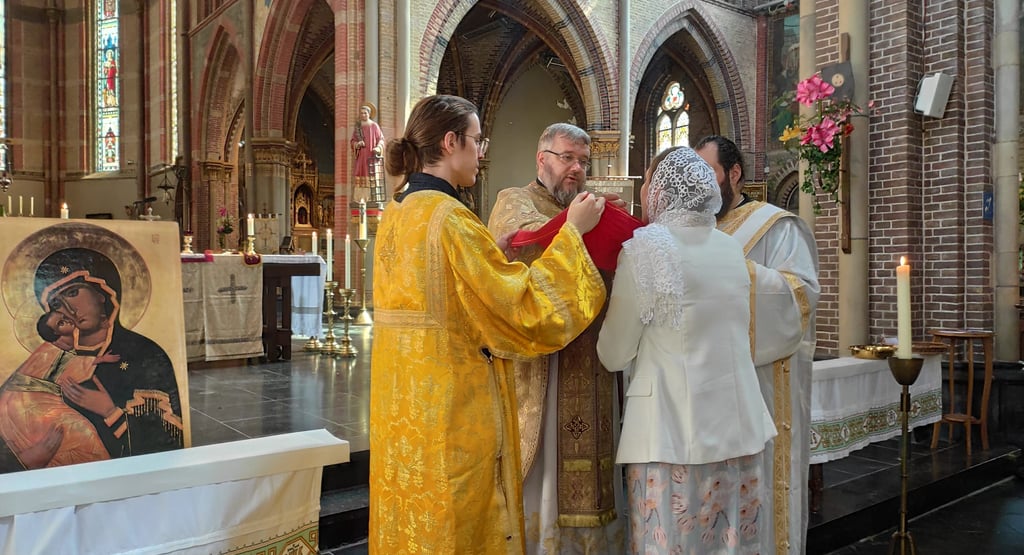
In today’s world, we increasingly encounter a distorted understanding of the Sacraments of the Church. Some see Baptism merely as a ritual “protection from dark forces,” and Confession as a formality required before receiving Communion. Such views deeply contradict the Orthodox teaching. In Christian tradition, the Sacraments hold a central place. They are channels of grace, an inseparable part of the spiritual life for anyone who considers themselves Orthodox.
Orthodox theology teaches us that the Sacraments are visible actions through which the invisible grace of the Holy Spirit is made manifest.
Saint Cyprian of Carthage wrote:
"Outside the Church there is no salvation, because there are no Sacraments. And without the Sacraments, there is no union with Christ."
Each Sacrament whether Baptism, Confession, or the Eucharist is plays a vital role in the anthropological and spiritual growth of a person.
Thus, the Sacraments of the Church are not just rites or religious forms. They are not mere “external confirmations of faith.” They are the life-giving sources through which God Himself enters the depths of the human soul. In every Sacrament, there is the action of the Holy Spirit, the presence of Christ, His living Word, His touch, His grace-filled energy that renews, cleanses, and saves.
This is not a metaphor or an allegory. This is the reality of eternal life breaking into the temporary, the incorrupt into the corrupt, the Divine into the human. In the Sacraments, we do not merely receive something from God. We are united with Him. It is the most personal, the most living encounter with Christ Himself, who established these Sacraments and continues to act through them to this very day.
Therefore, when we draw near to the Sacraments, we are approaching not just symbols — but the Living God. And if our heart opens, if our faith is joined with humility, if love overcomes fear, then we will not merely take part in a ritual, but become partakers of the divine nature (2 Peter 1:4). And that is no longer a rite it is eternity beginning here and now.
Baptism Is Not a Ritual, but the Death of the “Old Self” and Resurrection with Christ
Today, many people see Baptism merely as a ritual “protection”, something like a spiritual “insurance” to keep the child from being “cursed” or to prevent misfortune. Some view it as a tradition inherited from ancestors or a way to mark someone as “one of us” or “outsider.” But this is a dangerous oversimplification and a deep distortion of the great Mystery.
Baptism is not magical protection. It is a personal participation in the Mystery of the Cross and Resurrection. It is a spiritual death to sin and a rebirth to life in God.
The Apostle Paul says:
“Or don’t you know that all of us who were baptized into Christ Jesus were baptized into his death?” (Romans 6:3)
This means that at Baptism, a person enters into the very heart of the saving history: they don’t simply “become a Christian” they die with Christ, leaving behind the old self with its sins, fears, and selfishness, and rise again with Him into a new existence as a child of God’s Kingdom.
Saint John Chrysostom says:
“Through Baptism we become new people, children of God. It is not merely a washing, but participation in Christ’s death and resurrection.”
It is a birth from water and the Spirit (John 3:5), in which not only one’s status changes, but one’s very nature. The baptized no longer belong to the world of darkness; they are sealed with the Holy Spirit, incorporated into the Body of Christ the Church and called to holiness.
Baptism is also a personal Pascha (Passover). Not just a church event, but the moment when Christ enters the heart forever. And if it is a child, the parents consciously bring them to this new life, taking upon themselves the holy responsibility to raise not merely a “good person,” but a living member of Christ’s Body.
This Sacrament is not a formality, but the door to salvation. Therefore, when approaching it, we should not seek “protection from evil spirits,” but open ourselves to God’s grace that changes everything. Because after Baptism, life no longer belongs to us alone it belongs to Christ.
Confession Is Not Just a Ritual. It’s a Chance for the Soul to Be Reborn
Nowadays, many people see Confession simply as a formality, like a religious checklist before Communion. People quickly list their sins without truly reflecting on them, and the main goal is not genuine repentance but just to get through to the Chalice. This kind of Confession is often called “nominal,” meaning it is, in essence, merely formal.
Where did this come from?
In the early centuries of Christianity, people received Communion every Sunday. Confession was reserved for when someone realized they had done something very serious that separated them from God and the community of believers. But later, in Orthodox countries, for various historical reasons (such as Ottoman rule, the Russian Empire, shortage of priests), people stopped communing weekly and began to do so rarely, only on major feast days and only after mandatory Confession.
This led to the idea (which is not entirely correct theologically) that Confession is required before every Communion. In reality, this was a temporary measure intended to teach people to take the Sacraments more seriously.
Saint John Climacus said: Confession is like a second Baptism. Through repentance, we cleanse the soul and restore the grace lost through sin.
And Saint Theophan the Recluse warned:
Do not approach Confession without a true desire to change. Don’t think that merely listing your sins automatically brings forgiveness. The heart must repent sincerely.
How should it be done properly?
If you have not committed any conscious serious sins that separate you from God, it is not necessary to confess before every Communion.
But if you have sinned, repent sincerely and do not wait for a feast day or special occasion.
Confession is not just an obligatory requirement it is an opportunity to restore your relationship with God.
True Confession is when the heart changes; when a person humbly acknowledges their sins and decides to start anew.
The Eucharist Is Not a Symbol, but Christ Himself
The Eucharist is not merely a church ritual or a symbolic reminder of the Last Supper. It is Christ Himself, given to us in His Flesh and Blood. It is the heart of the Church, the center of all Christian life, a mystery of union between man and God that surpasses human understanding but touches the very core, heart, and soul of every believer.
In Holy Scripture, the Savior speaks plainly and without allegory:
“Truly, truly, I say to you, unless you eat the flesh of the Son of Man and drink his blood, you have no life in you.” (John 6:53)
This is not a metaphor or a figure of speech. It is a holy and awe-inspiring reality. Through Communion, we do not merely remember Christ, we become one body with Him, one being in the Spirit. In this Sacrament, He enters into us so that we may live by Him.
Saint Ignatius of Antioch († early 2nd century) witness of the early Church
He called the Eucharist the “medicine of immortality and the guarantee of resurrection”:
“Hold fast to the Eucharist, for it is the flesh of our Savior Jesus Christ, which gives us eternal life.” (Letter to the Ephesians, 20)
For Ignatius, there was no doubt: Communion is not a symbol but Christ Himself, living and true. This is why the early Christians guarded the Eucharist with such reverence even at the cost of their lives.
Saint Athanasius the Great (4th century)
“Even the angels stand in awe when they see a person partaking of the divine Mysteries... for it is the fire of the Divine essence entering weak flesh.”
This is not religious poetry but theology born of experience: Communion is a fire that does not destroy but transforms; it is a Sacrament that leads us into the very depths of Divine love.
Saint Gregory the Theologian (4th century)
He spoke of Communion as both suffering and joy:
“I fear to receive Him because I am a sinner. Yet I fear even more to refuse Him, for He is Life.”
These words reveal the profound sacred fear with which a person approaches the Holy Mysteries — not as a mechanical habit, not out of mere routine, but with trembling soul encountering the eternal God.
The Eucharist it is the place of the greatest encounter
When we partake of Communion, it is not that we take Christ. He takes us into Himself. At this moment, our body and soul embrace His Flesh and His Spirit. It is the moment of ultimate transformation when the corruptible touches the incorruptible, and the earthly meets the eternal.
It is no accident that the Divine Liturgy is the climax of every worship service. For in it, the very Mystery of salvation is accomplished, and to be absent from it is to live outside the fullness of the Church.
The Eucharist is the heart of the Church, and if that heart ceases to beat in my soul, it means I am spiritually dead.
De Orthodoxe Parochie van de Geboorte van de Moeder Gods en de Heilige Adelbert
KvK 99887282 · RSIN 869173625
Oecumenisch Patriarchaat van Constantinopel
Contacts
priest: Andriy (Todosiychuk)
number: 06-23882565 (WhatsApp/ Telegram)
e-mail: fr.andriy@orthodox-alkmaar.nl
Our social media
Church Service Venues
©2026 The Orthodox Parish of the Nativity Theotokos in Alkmaar and Saint Adalbert of Egmond. All rights reserved.
Monastery of Saint Adalbert
Vennewatersweg 25, 1935 AR
Egmond-Binnen